Basicscategory List
API endpoint that allows saved sessions to be viewed or edited.
GET /basicscategory/?format=api&ordering=-meta_title
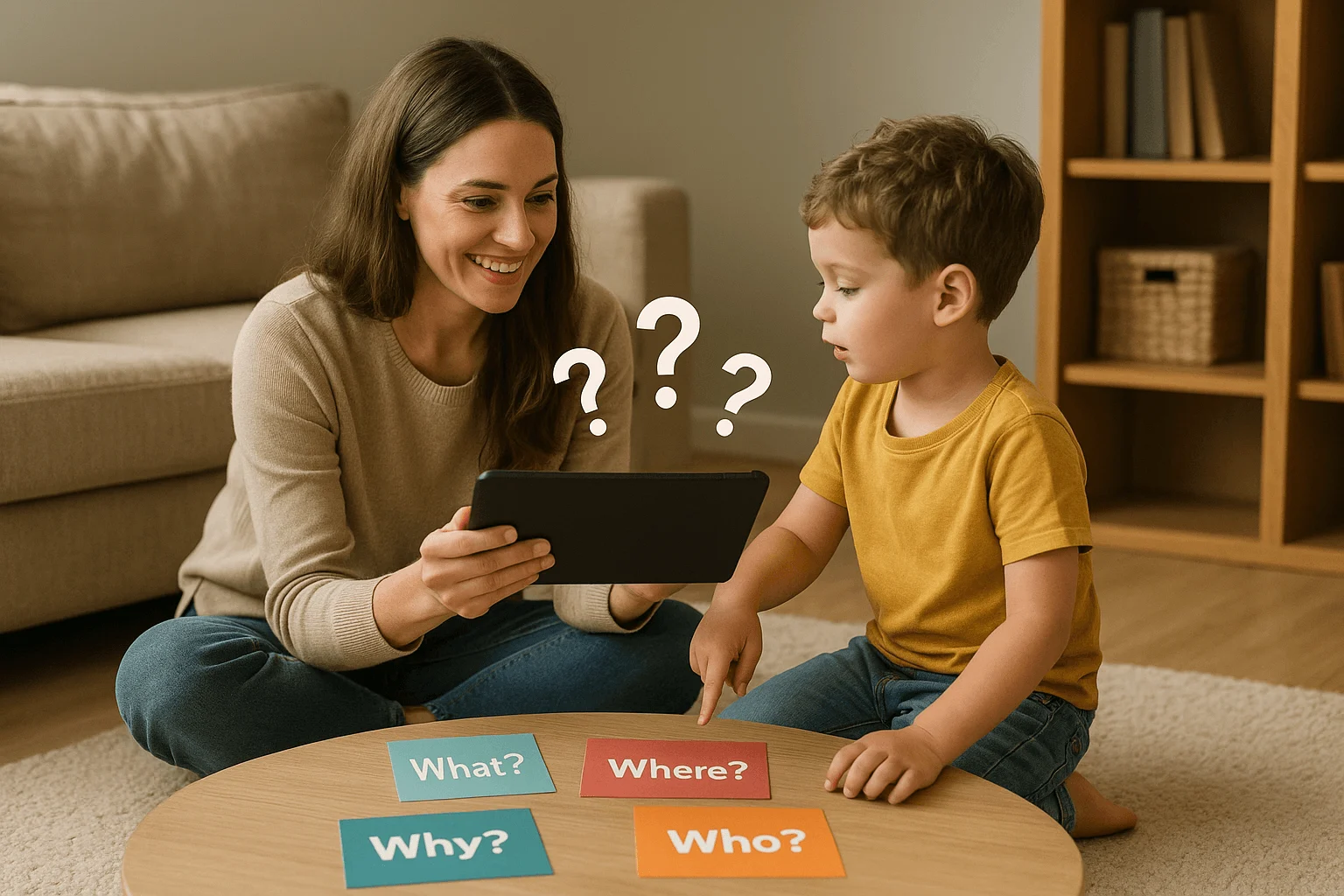
[ { "id": 4, "name": "WH Questions for Kids", "description": "Help your child master WH questions—Who, What, When, Where, Why, and How—with engaging worksheets and practice tools. Improve comprehension, sentence formation, and communication skills. Perfect for early learners.", "meta_title": "WH Questions for Kids – Practice with Printable Worksheets & Flashcards", "meta_description": "Help your child master WH questions with engaging flashcards, worksheets, and activities. Perfect for speech therapy, home learning, and early education.", "long_description": "<div class='urvnruninern'>\r\n <div class='vrergbhbgv'>\r\n <h2 class='fvbhnjbre'>Introduction to WH Questions Resources for Kids</h2>\r\n <p class='bhnghbgvf'>\r\n Teaching WH questions—Who, What, When, Where, Why, and How—is a critical step in building your child's communication and comprehension skills. Our WH Questions resources are thoughtfully designed for young learners, helping them understand question formats, sentence structure, and everyday conversation patterns. Whether your child is in preschool, kindergarten, or early elementary, our printable WH question worksheets, flashcards, and activity sets support skill-building in a fun and structured way.\r\n </p>\r\n <p class='bhnghbgvf'>\r\n These materials are perfect for parents, teachers, and speech therapists looking to promote language development through interactive and visual learning tools. With downloadable PDFs, colorful illustrations, and real-life scenarios, your child will learn to ask and answer WH questions with confidence.\r\n </p>\r\n </div>\r\n <div class='vrergbhbgv'>\r\n <h2 class='fvbhnjbre'>How WH Questions Resources Build Communication Skills</h2>\r\n <p class='encjvenjenr'>Our WH Questions activities are created with educational intent and developmental clarity, ensuring every child can engage at their own pace:</p>\r\n <div class='nvrnreervrnr'>\r\n <p class='bhnghbgvf'>\r\n <span class='erbtbrverec'>Visual Supports: </span>Vibrant flashcards for each WH question type help kids visually connect concepts.\r\n </p>\r\n <p class='bhnghbgvf'>\r\n <span class='erbtbrverec'>Printable WH Worksheets (PDFs): </span>Targeted question formats with images and sentence cues.\r\n </p>\r\n <p class='bhnghbgvf'>\r\n <span class='erbtbrverec'>Real-Life Scenarios: </span>Prompts like “Who is cooking?” or “Why do we wear a jacket?” link learning to everyday situations.\r\n </p>\r\n <p class='bhnghbgvf'>\r\n <span class='erbtbrverec'>Structured Question Practice: </span>Repetition and visual guidance help children understand grammar and context.\r\n </p>\r\n </div>\r\n <p class='encjvenjenr'>These tools are ideal for speech therapy, classroom use, and home-based learning, empowering children to develop expressive and receptive language skills through consistent WH question practice.</p>\r\n </div>\r\n <div class='vrergbhbgv'>\r\n <h2 class='fvbhnjbre'>Types of WH Questions Resources Available</h2>\r\n <p class='encjvenjenr'>We offer a range of WH question teaching tools suitable for diverse learners:</p>\r\n <div class='nvrnreervrnr'>\r\n <p class='bhnghbgvf'>\r\n <span class='erbtbrverec'>WH Questions Flashcards: </span>Covers all six types—Who, What, When, Where, Why, and How.\r\n </p>\r\n <p class='bhnghbgvf'>\r\n <span class='erbtbrverec'>WH Question Worksheets (PDF): </span>Printable worksheets for practice and repetition.\r\n </p>\r\n <p class='bhnghbgvf'>\r\n <span class='erbtbrverec'>Matching & Sorting Activities: </span>Helps children categorize answers to specific WH prompts.\r\n </p>\r\n <p class='bhnghbgvf'>\r\n <span class='erbtbrverec'>Conversation Starters & Prompts: </span>Encourages dialogue-building and sentence expansion.\r\n </p>\r\n <p class='bhnghbgvf'>\r\n <span class='erbtbrverec'>Visual Sentence Strips: </span>Supports nonverbal or speech-delayed children in answering WH questions.\r\n </p>\r\n </div>\r\n <p class='encjvenjenr'>Each resource is crafted to support vocabulary building, sentence comprehension, and interactive dialogue development.</p>\r\n </div>\r\n <div class='vrergbhbgv'>\r\n <h2 class='fvbhnjbre'>Who Should Use These WH Questions Resources?</h2>\r\n <p class='encjvenjenr'>Our WH Questions materials are developed to support:</p>\r\n <div class='nvrnreervrnr'>\r\n <p class='bhnghbgvf'>\r\n Parents and caregivers helping children improve communication at home.\r\n </p>\r\n <p class='bhnghbgvf'>\r\n Teachers seeking engaging classroom activities for language lessons.\r\n </p>\r\n <p class='bhnghbgvf'>\r\n Speech-language pathologists (SLPs) working with children on expressive and receptive language goals.\r\n </p>\r\n </div>\r\n <p class='encjvenjenr'>No matter the setting, our WH questions flashcards and worksheets provide an effective path to language growth.</p>\r\n </div>\r\n <div class='vrergbhbgv'>\r\n <h2 class='fvbhnjbre'>Benefits of Teaching WH Questions to Kids</h2>\r\n <p class='encjvenjenr'>Mastering WH questions opens the door to richer conversations and better comprehension. Benefits include:</p>\r\n <div class='nvrnreervrnr'>\r\n <p class='bhnghbgvf'>\r\n <span class='erbtbrverec'>Improved expressive language: </span>Children learn to ask and answer questions clearly.\r\n </p>\r\n <p class='bhnghbgvf'>\r\n <span class='erbtbrverec'>Stronger reading comprehension: </span>Understanding question forms boosts reading skills.\r\n </p>\r\n <p class='bhnghbgvf'>\r\n <span class='erbtbrverec'>Social communication: </span>Kids participate more effectively in conversations.\r\n </p>\r\n <p class='bhnghbgvf'>\r\n <span class='erbtbrverec'>Critical thinking: </span>WH questions promote reasoning and contextual understanding.\r\n </p>\r\n <p class='bhnghbgvf'>\r\n <span class='erbtbrverec'>Parent-child bonding: </span>Learning becomes a fun, shared activity.\r\n </p>\r\n </div>\r\n <p class='encjvenjenr'>Our WH Questions tools are especially helpful for early intervention and building foundational communication skills in children ages 3–8.</p>\r\n </div>\r\n <div class='vrergbhbgv'>\r\n <h2 class='fvbhnjbre'>Tips for Using WH Questions Worksheets and Flashcards Effectively</h2>\r\n \r\n <div class='nvrnreervrnr'>\r\n <p class='bhnghbgvf'>\r\n Begin with one question type per week (e.g., “Who”) to avoid overwhelm.\r\n </p>\r\n <p class='bhnghbgvf'>\r\n Use flashcards with real images to create relatable associations.\r\n </p>\r\n <p class='bhnghbgvf'>\r\n Reinforce learning during daily routines (e.g., “What are you eating?” at lunch).\r\n </p>\r\n <p class='bhnghbgvf'>\r\n Practice turn-taking using WH question games or roleplay.\r\n </p>\r\n <p class='bhnghbgvf'>\r\n Print and organize PDF worksheets into daily or weekly practice folders.\r\n </p>\r\n <p class='bhnghbgvf'>\r\n Track progress by encouraging your child to answer in full sentences.\r\n </p>\r\n </div>\r\n <p class='encjvenjenr'>Consistent practice with real-life application will help your child retain and apply their WH question skills naturally.</p>\r\n </div>\r\n <div class='vrergbhbgv'>\r\n <h2 class='fvbhnjbre'>Real-Life Applications of WH Questions Resources</h2>\r\n <div class='nvrnreervrnr'>\r\n <p class='bhnghbgvf'>\r\n <span class='erbtbrverec'>Morning Routines: </span>“What do we wear when it rains?”\r\n </p>\r\n <p class='bhnghbgvf'>\r\n <span class='erbtbrverec'>Storytime: </span>“Who is the main character in the story?”\r\n </p>\r\n <p class='bhnghbgvf'>\r\n <span class='erbtbrverec'>Play-Based Learning: </span>Use dolls, toys, or pictures to ask “Where are they going?”\r\n </p>\r\n <p class='bhnghbgvf'>\r\n <span class='erbtbrverec'>Therapy Sessions: </span>Visual prompts to ask and answer “Why is the boy crying?”\r\n </p>\r\n <p class='bhnghbgvf'>\r\n <span class='erbtbrverec'>Classroom Circle Time: </span>Use WH cards for group Q&A practice.\r\n </p>\r\n \r\n </div>\r\n <p class='encjvenjenr'>Our WH Questions materials turn ordinary moments into language-rich learning opportunities.</p>\r\n \r\n </div>\r\n \r\n <div class='sdgbfgdvfscd'>\r\n <h2 class='fvbhnjbre'>FAQs</h2>\r\n <div class='ecfvgbhtrve'>\r\n <p class='rerbthbrv'>Q1: What are WH questions and why are they important for kids?</p>\r\n <p class='bhnghbgvf'>\r\n A1: WH questions include words like Who, What, When, Where, Why, and How. They help children develop language comprehension, critical thinking, and the ability to express ideas clearly. Mastering WH questions lays the foundation for effective communication.\r\n </p>\r\n </div>\r\n <div class='ecfvgbhtrve'>\r\n <p class='rerbthbrv'>Q2: At what age should I start teaching WH questions to my child?</p>\r\n <p class='bhnghbgvf'>\r\n A2: Most children can start learning simple WH questions around age 3. Our resources are designed for ages 3 to 8, with visuals and activities tailored to their developmental stage and learning pace.\r\n </p>\r\n </div>\r\n <div class='ecfvgbhtrve'>\r\n <p class='rerbthbrv'>Q3: How can I use WH question flashcards and worksheets at home?</p>\r\n <p class='bhnghbgvf'>\r\n A3: Use flashcards during everyday routines—ask \"What are you eating?\" or \"Where is the toy?\" Worksheets can be printed and used for practice sessions, storytelling, or therapy exercises at home.\r\n </p>\r\n </div>\r\n <div class='ecfvgbhtrve'>\r\n <p class='rerbthbrv'>Q4: Are these WH questions resources suitable for children with speech delays or autism?</p>\r\n <p class='bhnghbgvf'>\r\n A4: Yes. Our WH question activities are frequently used by speech therapists and special educators. They include visual aids, repetition, and structure—making them ideal for children with speech delays, autism, or language processing challenges.\r\n </p>\r\n </div>\r\n <div class='ecfvgbhtrve'>\r\n <p class='rerbthbrv'>Q5: Can teachers and therapists use these WH question tools in classrooms or sessions?</p>\r\n <p class='bhnghbgvf'>\r\n A5: Absolutely! Our printable PDFs, flashcards, and prompts are classroom-ready and therapist-approved. They’re perfect for group instruction, one-on-one sessions, or teletherapy environments. \r\n </p>\r\n </div>\r\n</div>\r\n\r\n <div class='vrergbhbgv'>\r\n <h2 class='fvbhnjbre'>Related Topics and Further Learning for Parents</h2>\r\n <p class='encjvenjenr'>Support your child’s growth in answering WH questions with these helpful tools:</p>\r\n <div class='nvrnreervrnr'>\r\n <p class='bhnghbgvf'>\r\n <span class='erbtbrverec'>WH Question Flashcards (PDFs): </span>Reinforce “Who,” “What,” “Where,” “Why,” “When,” and “How” with visual cues.\r\n </p>\r\n <p class='bhnghbgvf'>\r\n <span class='erbtbrverec'>Simple Sentence Builders: </span>Combine WH prompts with sentence starters for natural conversations.\r\n </p>\r\n <p class='bhnghbgvf'>\r\n <span class='erbtbrverec'>Speech Therapy Resources: </span>Ideal for children with language delays or communication challenges.\r\n </p>\r\n </div>\r\n <p class='encjvenjenr'>Explore our full collection of WH question tools designed to make language learning fun, effective, and parent-friendly.</p>\r\n </div>\r\n</div>", "url": "wh-questions-for-kids", "reviews": "[{'name': 'Priya R., Bangalore', 'value': 'As a mom of two, I struggled to teach my kids how to form sentences. The downloadable PDFs made it so easy to structure our lessons, and my kids loved the colorful visuals. Highly recommend for any parent!'}, {'name': 'John M., New York', 'value': 'I use the sentence-building flashcards and worksheets with my 5-year-old. They’re simple, engaging, and have really helped my child grasp the basics of grammar. It’s great to have resources that work!'}, {'name': 'Maria L., Sydney', 'value': 'As a kindergarten teacher, I found these resources very helpful for my classroom. The printable activities kept my students engaged and made learning fun. They also work well for homework assignments.'}, {'name': 'Neha K., Delhi', 'value': 'We started using the sentence worksheets to improve my son’s language skills, and the results are incredible. He’s now excited to form sentences on his own and even makes up little stories. Thank you!'}, {'name': 'Emma J., London', 'value': 'The interactive sentence-building activities and downloadable PDFs are such a great addition to our home learning routine. My daughter loves them, and I’ve seen noticeable improvement in her communication skills.'}]", "faqs": "[{'question': 'What are WH questions and why are they important for kids?', 'answer': 'WH questions include words like Who, What, When, Where, Why, and How. They help children develop language comprehension, critical thinking, and the ability to express ideas clearly. Mastering WH questions lays the foundation for effective communication.'}, {'question': 'At what age should I start teaching WH questions to my child?', 'answer': 'Most children can start learning simple WH questions around age 3. Our resources are designed for ages 3 to 8, with visuals and activities tailored to their developmental stage and learning pace.'}, {'question': 'How can I use WH question flashcards and worksheets at home?', 'answer': 'Use flashcards during everyday routines—ask What are you eating? or Where is the toy? Worksheets can be printed and used for practice sessions, storytelling, or therapy exercises at home.'}, {'question': 'Are these WH questions resources suitable for children with speech delays or autism?', 'answer': 'Yes. Our WH question activities are frequently used by speech therapists and special educators. They include visual aids, repetition, and structure—making them ideal for children with speech delays, autism, or language processing challenges.'}, {'question': 'Can teachers and therapists use these WH question tools in classrooms or sessions?', 'answer': 'Absolutely! Our printable PDFs, flashcards, and prompts are classroom-ready and therapist-approved. They’re perfect for group instruction, one-on-one sessions, or teletherapy environments.'}]", "image_url": "https://experteaseimages.s3.ap-south-1.amazonaws.com/section1-categories-wh-questions-For-Kids-nrenvrenieew.webp", "testimonial_section_description": "" }, { "id": 3, "name": "Teaching Sentences For Kids", "description": "Introducing your child to sentences is an essential step in their language development journey. With the right tools, parents can make this process simple, fun, and engaging. Our Teaching Sentences For Kids resources offer a comprehensive solution to help young learners build a strong foundation in grammar and sentence structure.", "meta_title": "Teaching Sentences for Kids | Download Printable PDF Resources for Parents", "meta_description": "Discover the best resources for teaching sentences to kids! Download printable PDFs, sentence-building worksheets, and fun activities to enhance grammar and language skills. Perfect for parents, caregivers, and teachers looking to teach kids at home effectively. Explore our sentence formation guides today!", "long_description": "<div class='urvnruninern'>\r\n <div class='vrergbhbgv'>\r\n <h2 class='fvbhnjbre'>Introduction to Teaching Sentences For Kids Resources</h2>\r\n <p class='bhnghbgvf'>\r\n Teaching children how to form and understand sentences can seem challenging, but our curated resources make it an enjoyable experience. These materials are designed specifically for young learners, ensuring that they grasp sentence concepts with ease. From interactive worksheets to downloadable PDFs, our resources cater to diverse learning styles, making education accessible and effective. Whether your child is just starting to form sentences or needs help refining their skills, our resources are here to help. With free sentence-building worksheets and step-by-step guides, you can turn everyday interactions into valuable learning opportunities.\r\n </p>\r\n </div>\r\n <div class='vrergbhbgv'>\r\n <h2 class='fvbhnjbre'>How Our Resources Aid Language Development</h2>\r\n <p class='encjvenjenr'>Our resources focus on making sentence learning simple and effective by using:</p>\r\n <div class='nvrnreervrnr'>\r\n <p class='bhnghbgvf'>\r\n <span class='erbtbrverec'>Visual aids: </span>Brightly colored charts and flashcards to keep kids engaged.\r\n </p>\r\n <p class='bhnghbgvf'>\r\n <span class='erbtbrverec'>Practice worksheets: </span>Available as PDFs for easy download and printing.\r\n </p>\r\n <p class='bhnghbgvf'>\r\n <span class='erbtbrverec'>Interactive activities: </span>Games and exercises designed to encourage critical thinking.\r\n </p>\r\n </div>\r\n <p class='encjvenjenr'>By breaking down complex concepts into manageable steps, our materials help children develop confidence in forming sentences. These resources are ideal for home learning, providing parents and caregivers with tools to support their child's education.</p>\r\n </div>\r\n <div class='vrergbhbgv'>\r\n <h2 class='fvbhnjbre'>Types of Teaching Sentences For Kids We Offer</h2>\r\n <p class='encjvenjenr'>We provide a variety of tools to suit your child’s unique needs:</p>\r\n <div class='nvrnreervrnr'>\r\n <p class='bhnghbgvf'>\r\n <span class='erbtbrverec'>Sentence-Building Worksheets (PDFs): </span>Focused on creating simple, compound, and complex sentences.\r\n </p>\r\n <p class='bhnghbgvf'>\r\n <span class='erbtbrverec'>Flashcards for Sentence Formation: </span>Perfect for quick learning and review sessions.\r\n </p>\r\n <p class='bhnghbgvf'>\r\n <span class='erbtbrverec'>Interactive Sentence Games: </span>Fun activities to reinforce sentence structure in a playful way.\r\n </p>\r\n <p class='bhnghbgvf'>\r\n <span class='erbtbrverec'>Downloadable Sentence Guides: </span>Easy-to-follow tips and tricks for teaching sentences at home.\r\n </p>\r\n </div>\r\n <p class='encjvenjenr'>These resources are designed to make sentence learning accessible to all, whether you’re teaching a toddler their first phrases or helping older kids with grammar.</p>\r\n </div>\r\n <div class='vrergbhbgv'>\r\n <h2 class='fvbhnjbre'>Who Can Use These Resources?</h2>\r\n <p class='encjvenjenr'>Our sentence resources are tailored for:</p>\r\n <div class='nvrnreervrnr'>\r\n <p class='bhnghbgvf'>\r\n <span class='erbtbrverec'>Parents and caregivers: </span>Offering tools to teach kids at home with ease.\r\n </p>\r\n <p class='bhnghbgvf'>\r\n <span class='erbtbrverec'>Teachers and tutors: </span>Looking for classroom-friendly worksheets and activities.\r\n </p>\r\n <p class='bhnghbgvf'>\r\n <span class='erbtbrverec'>Therapists: </span>Supporting language development in children with special needs.\r\n </p>\r\n </div>\r\n <p class='encjvenjenr'>No matter your role, our Teaching Sentences For Kids PDFs ensure that sentence learning is effective and fun.</p>\r\n </div>\r\n <div class='vrergbhbgv'>\r\n <h2 class='fvbhnjbre'>Benefits of Teaching Sentences For Kids at Home</h2>\r\n <p class='encjvenjenr'>Teaching sentences at home offers numerous benefits, including:</p>\r\n <div class='nvrnreervrnr'>\r\n <p class='bhnghbgvf'>\r\n <span class='erbtbrverec'>Stronger language skills: </span>Improved grammar, vocabulary, and communication.\r\n </p>\r\n <p class='bhnghbgvf'>\r\n <span class='erbtbrverec'>Enhanced creativity: </span>Encouraging children to express thoughts through sentences.\r\n </p>\r\n <p class='bhnghbgvf'>\r\n <span class='erbtbrverec'>Bonding opportunities: </span>Making learning a shared experience between parents and kids.\r\n </p>\r\n <p class='bhnghbgvf'>\r\n <span class='erbtbrverec'>Convenience: </span>With our downloadable PDFs, learning can happen anytime, anywhere.\r\n </p>\r\n \r\n </div>\r\n <p class='encjvenjenr'>Empower your child with the skills they need to communicate confidently by incorporating sentence-learning activities into their daily routine.</p>\r\n </div>\r\n <div class='vrergbhbgv'>\r\n <h2 class='fvbhnjbre'>Tips for Using Teaching Sentences For Kids Resources Effectively</h2>\r\n \r\n <div class='nvrnreervrnr'>\r\n <p class='bhnghbgvf'>\r\n <span class='erbtbrverec'>Start Simple: </span>Begin with short, easy sentences before progressing to complex ones.\r\n </p>\r\n <p class='bhnghbgvf'>\r\n <span class='erbtbrverec'>Use Visual Aids: </span>Flashcards and charts help children understand sentence components.\r\n </p>\r\n <p class='bhnghbgvf'>\r\n <span class='erbtbrverec'>Practice Daily: </span>Consistency is key; dedicate time each day to sentence practice.\r\n </p>\r\n <p class='bhnghbgvf'>\r\n <span class='erbtbrverec'>Incorporate Real-Life Examples: </span>Use everyday situations to teach sentence formation.\r\n </p>\r\n <p class='bhnghbgvf'>\r\n <span class='erbtbrverec'>Download and Organize PDFs: </span>Keep printable worksheets handy for structured lessons.\r\n </p>\r\n </div>\r\n <p class='encjvenjenr'>These tips will help you maximize the benefits of our resources while keeping the learning process enjoyable.</p>\r\n </div>\r\n <div class='vrergbhbgv'>\r\n <h2 class='fvbhnjbre'>Real-Life Examples of Teaching Sentences For Kids with Our Resources</h2>\r\n <div class='nvrnreervrnr'>\r\n <p class='bhnghbgvf'>\r\n <span class='erbtbrverec'>Everyday Conversations: </span>Use our sentence-building worksheets to teach kids how to describe their day. For instance, \"I went to the park\" can evolve into \"I went to the park with my friend.\"\r\n </p>\r\n <p class='bhnghbgvf'>\r\n <span class='erbtbrverec'>Storytelling Practice: </span>Download our sentence formation PDF worksheets to help kids narrate simple stories like \"The Cat and the Ball.\"\r\n </p>\r\n <p class='bhnghbgvf'>\r\n <span class='erbtbrverec'>Interactive Games: </span>Play sentence-matching games using flashcards to reinforce grammar rules.\r\n </p>\r\n \r\n </div>\r\n <p class='encjvenjenr'>These real-life applications show how versatile and effective our resources are for teaching sentences.</p>\r\n \r\n </div>\r\n \r\n <div class='sdgbfgdvfscd'>\r\n <h2 class='fvbhnjbre'>FAQs</h2>\r\n <div class='ecfvgbhtrve'>\r\n <p class='rerbthbrv'>Q1: How do I start teaching sentences to my child?</p>\r\n <p class='bhnghbgvf'>\r\n A1: Begin with simple sentences using everyday words your child is familiar with. Use sentence-building worksheets (available in PDF format) to introduce basic concepts like subject, verb, and object. Gradually increase complexity as they gain confidence.\r\n </p>\r\n </div>\r\n <div class='ecfvgbhtrve'>\r\n <p class='rerbthbrv'>Q2: Are these sentence resources suitable for all age groups?</p>\r\n <p class='bhnghbgvf'>\r\n A2: Our Teaching Sentences For Kids resources are designed for young learners aged 3-8. Parents can start with basic sentence formation for toddlers and progress to more advanced grammar concepts for older children.\r\n </p>\r\n </div>\r\n <div class='ecfvgbhtrve'>\r\n <p class='rerbthbrv'>Q3: Can I download printable worksheets for sentence learning?</p>\r\n <p class='bhnghbgvf'>\r\n A3: Yes! We offer a variety of downloadable PDFs that include sentence-building activities, flashcards, and guides. These resources are perfect for parents who prefer structured, offline learning materials.\r\n </p>\r\n </div>\r\n <div class='ecfvgbhtrve'>\r\n <p class='rerbthbrv'>Q4: How much time should I dedicate daily to teaching sentences?</p>\r\n <p class='bhnghbgvf'>\r\n A4: For young children, 10-15 minutes of focused sentence practice each day is effective. Use our printable worksheets or play sentence games to make learning engaging and productive.\r\n </p>\r\n </div>\r\n <div class='ecfvgbhtrve'>\r\n <p class='rerbthbrv'>Q5: How can I make sentence learning fun for my child?</p>\r\n <p class='bhnghbgvf'>\r\n A5: Incorporate activities like storytelling, matching games, and real-life examples. Using our interactive sentence-building PDFs and flashcards can add a playful element to learning while reinforcing key language skills.\r\n </p>\r\n </div>\r\n</div>\r\n\r\n <div class='vrergbhbgv'>\r\n <h2 class='fvbhnjbre'>Related Topics and Further Learning for Parents</h2>\r\n <p class='encjvenjenr'>Expand your child’s language skills with additional resources:</p>\r\n <div class='nvrnreervrnr'>\r\n <p class='bhnghbgvf'>\r\n <span class='erbtbrverec'>Vocabulary Flashcards: </span>Build a strong word bank for better sentences.\r\n </p>\r\n <p class='bhnghbgvf'>\r\n <span class='erbtbrverec'>Phonics Worksheets (PDFs): </span>Help your child decode and pronounce words correctly.\r\n </p>\r\n <p class='bhnghbgvf'>\r\n <span class='erbtbrverec'>Grammar Basics for Kids: </span>Introduce essential grammar concepts alongside sentences.\r\n </p>\r\n <p class='bhnghbgvf'>\r\n <span class='erbtbrverec'>Reading Comprehension Resources: </span>Improve understanding by connecting sentences to context.\r\n </p>\r\n </div>\r\n <p class='encjvenjenr'>Explore our wide range of resources designed to enhance language learning and make teaching at home easy and rewarding.</p>\r\n </div>\r\n</div>", "url": "teaching-sentences-for-kids", "reviews": "[{'name': 'Priya R., Bangalore', 'value': 'As a mom of two, I struggled to teach my kids how to form sentences. The downloadable PDFs made it so easy to structure our lessons, and my kids loved the colorful visuals. Highly recommend for any parent!'}, {'name': 'John M., New York', 'value': 'I use the sentence-building flashcards and worksheets with my 5-year-old. They’re simple, engaging, and have really helped my child grasp the basics of grammar. It’s great to have resources that work!'}, {'name': 'Maria L., Sydney', 'value': 'As a kindergarten teacher, I found these resources very helpful for my classroom. The printable activities kept my students engaged and made learning fun. They also work well for homework assignments.'}, {'name': 'Neha K., Delhi', 'value': 'We started using the sentence worksheets to improve my son’s language skills, and the results are incredible. He’s now excited to form sentences on his own and even makes up little stories. Thank you!'}, {'name': 'Emma J., London', 'value': 'The interactive sentence-building activities and downloadable PDFs are such a great addition to our home learning routine. My daughter loves them, and I’ve seen noticeable improvement in her communication skills.'}]", "faqs": "[{'question': 'How do I start teaching sentences to my child?', 'answer': 'Begin with simple sentences using everyday words your child is familiar with. Use sentence-building worksheets (available in PDF format) to introduce basic concepts like subject, verb, and object. Gradually increase complexity as they gain confidence.'}, {'question': 'Are these sentence resources suitable for all age groups?', 'answer': 'Our Teaching Sentences For Kids resources are designed for young learners aged 3-8. Parents can start with basic sentence formation for toddlers and progress to more advanced grammar concepts for older children.'}, {'question': 'Can I download printable worksheets for sentence learning?', 'answer': 'Yes! We offer a variety of downloadable PDFs that include sentence-building activities, flashcards, and guides. These resources are perfect for parents who prefer structured, offline learning materials.'}, {'question': 'How much time should I dedicate daily to teaching sentences?', 'answer': 'For young children, 10-15 minutes of focused sentence practice each day is effective. Use our printable worksheets or play sentence games to make learning engaging and productive.'}, {'question': 'How can I make sentence learning fun for my child?', 'answer': 'Incorporate activities like storytelling, matching games, and real-life examples. Using our interactive sentence-building PDFs and flashcards can add a playful element to learning while reinforcing key language skills.'}]", "image_url": "https://experteaseimages.s3.ap-south-1.amazonaws.com/section1-categories-Teaching-Sentences-For-Kids.webp", "testimonial_section_description": null }, { "id": 2, "name": "Social Stories for Emotions and Feelings", "description": "Discover the power of Social Stories for Emotions and Learning to nurture your child’s emotional intelligence and social skills. These tailored resources, available as PDFs for download, are designed to help children understand emotions, develop empathy, and improve interpersonal communication in a structured and engaging way.", "meta_title": "Social Stories for Emotions and Learning | Download PDF Resources for Kids", "meta_description": "Discover Social Stories for Emotions and Learning to nurture emotional intelligence and social skills in kids. Download relatable PDF resources for parents, caregivers, and educators to teach emotions, empathy, and interpersonal skills effectively.", "long_description": "<div class='urvnruninern'>\r\n <div class='vrergbhbgv'>\r\n <h2 class='fvbhnjbre'>Introduction to Social Stories for Emotions and Learning Resources</h2>\r\n <p class='bhnghbgvf'>\r\n Social stories are short, relatable narratives crafted to teach children how to navigate emotions, behaviors, and social situations effectively. These tools provide children with clear guidance on understanding their feelings, responding to challenges, and building positive relationships. At Wellness Hub, we offer an extensive collection of social stories in downloadable PDF formats, ensuring easy access and use. These resources are ideal for parents, caregivers, and educators seeking practical ways to enhance children’s emotional and social development.\r\n </p>\r\n </div>\r\n <div class='vrergbhbgv'>\r\n <h2 class='fvbhnjbre'>How Our Resources Aid Emotional and Social Growth</h2>\r\n <p class='encjvenjenr'>Our Social Stories for Emotions and Learning focus on real-life scenarios to teach critical skills, such as:</p>\r\n <ul class=\"furnenr\">\r\n <li class=\"krmkvrmkerjren\">Identifying and naming emotions like happiness, sadness, anger, and fear.</li>\r\n <li class=\"krmkvrmkerjren\">Coping with frustration or disappointment through structured strategies.</li>\r\n <li class=\"krmkvrmkerjren\">Building confidence in social interactions by understanding turn-taking and active listening.</li>\r\n <li class=\"krmkvrmkerjren\">Each story is crafted to resonate with children, making learning relatable and impactful. By using downloadable PDF social stories, you can introduce these concepts at home or in educational settings.</li>\r\n </ul>\r\n <p class='encjvenjenr'>Each story is crafted to resonate with children, making learning relatable and impactful. By using downloadable PDF social stories, you can introduce these concepts at home or in educational settings.</p>\r\n </div>\r\n <div class='vrergbhbgv'>\r\n <h2 class='fvbhnjbre'>Types of Social Stories for Emotions and Learning We Offer</h2>\r\n <p class='encjvenjenr'>Our collection covers diverse scenarios and age-appropriate topics, including:</p>\r\n <div class='nvrnreervrnr'>\r\n <p class='bhnghbgvf'>\r\n <span class='erbtbrverec'>Managing Emotions: </span>Stories that teach children how to handle anger, anxiety, and excitement.\r\n </p>\r\n <p class='bhnghbgvf'>\r\n <span class='erbtbrverec'>Developing Social Skills: </span>Stories about sharing, cooperation, and building friendships.\r\n </p>\r\n <p class='bhnghbgvf'>\r\n <span class='erbtbrverec'>Understanding Social Cues: </span>Narratives focusing on body language, facial expressions, and tone of voice.\r\n </p>\r\n <p class='bhnghbgvf'>\r\n <span class='erbtbrverec'>Problem-Solving Skills: </span>Stories addressing conflict resolution and decision-making in social contexts.\r\n </p>\r\n <p class='bhnghbgvf'>\r\n <span class='erbtbrverec'>Building Independence: </span>Encouraging responsibility and self-care routines.\r\n </p>\r\n </div>\r\n <p class='encjvenjenr'>All these resources are easily accessible in PDF format, allowing for a quick download and immediate use.</p>\r\n </div>\r\n <div class='vrergbhbgv'>\r\n <h2 class='fvbhnjbre'>Who Can Use These Resources?</h2>\r\n <p class='encjvenjenr'>Our Social Stories for Emotions and Learning PDFs are perfect for:</p>\r\n <div class='nvrnreervrnr'>\r\n <p class='bhnghbgvf'>\r\n <span class='erbtbrverec'>Parents and Caregivers: </span>Use these stories at home to reinforce emotional learning in a familiar environment.\r\n </p>\r\n <p class='bhnghbgvf'>\r\n <span class='erbtbrverec'>Educators: </span>Implement them in classrooms or therapy sessions for group or individual activities.\r\n </p>\r\n <p class='bhnghbgvf'>\r\n <span class='erbtbrverec'>Therapists: </span>Include these tools in intervention plans to support children with special needs, including autism and ADHD.\r\n </p>\r\n <p class='bhnghbgvf'>\r\n <span class='erbtbrverec'>Homeschoolers: </span>Make emotional and social learning an integral part of your curriculum.\r\n </p>\r\n </div>\r\n </div>\r\n <div class='vrergbhbgv'>\r\n <h2 class='fvbhnjbre'>Benefits of Social Stories for Emotions and Learning at Home</h2>\r\n <p class='encjvenjenr'>Using social stories as part of your child’s home routine offers several advantages:</p>\r\n <div class='nvrnreervrnr'>\r\n <p class='bhnghbgvf'>\r\n <span class='erbtbrverec'>Promotes Emotional Intelligence: </span>Helps children understand their own and others' emotions.\r\n </p>\r\n <p class='bhnghbgvf'>\r\n <span class='erbtbrverec'>Fosters Communication Skills: </span>Enhances vocabulary and expression through storytelling.\r\n </p>\r\n <p class='bhnghbgvf'>\r\n <span class='erbtbrverec'>Supports Positive Behavior: </span>Guides children toward constructive responses to challenges.\r\n </p>\r\n <p class='bhnghbgvf'>\r\n <span class='erbtbrverec'>Builds Confidence: </span>Equips children with tools to face social scenarios comfortably.\r\n </p>\r\n <p class='bhnghbgvf'>\r\n <span class='erbtbrverec'>Encourages Family Bonding: </span>Creates opportunities for meaningful discussions during reading sessions.\r\n </p>\r\n </div>\r\n <p class='encjvenjenr'>By incorporating these downloadable PDFs, parents can create a consistent and supportive learning environment.</p>\r\n </div>\r\n <div class=\"vrergbhbgv\">\r\n <h2 class=\"fvbhnjbre\">Tips for Using Social Stories for Emotions and Learning Resources Effectively</h2>\r\n \r\n <div class=\"nvrnreervrnr\">\r\n <p class=\"bhnghbgvf\">\r\n <span class=\"erbtbrverec\">Choose the Right Story: </span>Select a story relevant to your child’s current challenges or developmental stage.\r\n </p>\r\n <p class=\"bhnghbgvf\">\r\n <span class=\"erbtbrverec\">Make It Interactive: </span>Discuss the story with your child, ask questions, and encourage role-playing.\r\n </p>\r\n <p class=\"bhnghbgvf\">\r\n <span class=\"erbtbrverec\">Practice Regularly: </span>Revisit stories to reinforce learning and build confidence.\r\n </p>\r\n <p class=\"bhnghbgvf\">\r\n <span class=\"erbtbrverec\">Personalize When Needed: </span>Add your child’s name or familiar scenarios to make the stories more engaging.\r\n </p>\r\n <p class=\"bhnghbgvf\">\r\n <span class=\"erbtbrverec\">Pair with Visual Aids: </span>Use pictures or charts to complement the story and enhance understanding.\r\n </p>\r\n </div>\r\n</div>\r\n\r\n <div class=\"vrergbhbgv\">\r\n <h2 class=\"fvbhnjbre\">Real-Life Examples of Social Stories for Emotions and Learning</h2>\r\n <p class=\"encjvenjenr\">Our Social Stories for Emotions and Learning provide hands-on strategies to help children understand and manage emotions, develop social skills, and build meaningful connections. Here are some practical ways parents, teachers, and therapists can use these resources:</p>\r\n <div class=\"nvrnreervrnr\">\r\n <p class=\"bhnghbgvf\">\r\n <span class=\"erbtbrverec\">Managing Anger with Calming Techniques: </span>A parent might use a Social Story that explains how to recognize anger and introduces simple calming techniques like counting to ten, deep breathing, or using a \"calm-down corner.\" This helps children understand their emotions and respond to frustration in constructive ways.\r\n </p>\r\n <p class=\"bhnghbgvf\">\r\n <span class=\"erbtbrverec\">Practicing Empathy with “How Others Feel” Stories: </span>A teacher could use a story about empathy to illustrate how others feel in different situations. For example, a story might depict a child comforting a friend who is sad. After reading, children can discuss the situation, enhancing their understanding of empathy and compassion.\r\n </p>\r\n <p class=\"bhnghbgvf\">\r\n <span class=\"erbtbrverec\">Learning Turn-Taking through Playtime Scenarios: </span>A therapist might use a Social Story PDF describing how to take turns while playing a game or sharing toys. Through role-play and discussion, children learn patience and cooperative skills essential for positive peer interactions.\r\n </p>\r\n <p class=\"bhnghbgvf\">\r\n <span class=\"erbtbrverec\">Understanding Facial Expressions with Visual Stories: </span>Parents can use stories with illustrations of facial expressions to help children recognize emotions like happiness, anger, or surprise. By discussing these expressions, children build their ability to identify and respond to non-verbal social cues.\r\n </p>\r\n <p class=\"bhnghbgvf\">\r\n <span class=\"erbtbrverec\">Building Confidence in New Social Situations: </span>A Social Story for starting school could guide a child through what to expect on their first day—meeting new friends, listening to teachers, and raising their hand to ask questions. This prepares children for unfamiliar situations, reducing anxiety and building confidence.\r\n </p>\r\n <p class=\"bhnghbgvf\">\r\n <span class=\"erbtbrverec\">Resolving Conflicts with “Problem-Solving” Stories: </span>A therapist might use a story about resolving conflicts to teach children how to handle disagreements, such as taking turns to speak and apologizing when wrong. These stories empower children to manage conflicts effectively, promoting peaceful resolutions.\r\n </p>\r\n <p class=\"bhnghbgvf\">\r\n <span class=\"erbtbrverec\">Strengthening Listening Skills with “Paying Attention” Stories: </span>A teacher could use a Social Story highlighting the importance of listening in class, such as focusing on the teacher’s instructions or waiting until someone finishes speaking. This reinforces active listening as a key social skill.\r\n </p>\r\n <p class=\"bhnghbgvf\">\r\n <span class=\"erbtbrverec\">Coping with Disappointment through Relatable Scenarios: </span>Parents can use a Social Story that depicts a child handling disappointment, such as not getting their favorite toy. By showing how the child expresses their feelings and moves on, these stories provide valuable coping strategies.\r\n </p>\r\n </div>\r\n</div>\r\n\r\n \r\n <div class='sdgbfgdvfscd'>\r\n <h2 class='fvbhnjbre'>FAQs</h2>\r\n <div class='ecfvgbhtrve'>\r\n <p class='rerbthbrv'>Q1: What are Social Stories, and how do they help with emotions and learning?</p>\r\n <p class='bhnghbgvf'>\r\n A1: Social Stories are short, structured narratives designed to help children understand emotions, behaviors, and social situations. These stories use relatable examples and clear language to teach children how to manage their feelings, interact with others, and build important social skills. By focusing on real-life scenarios, Social Stories help children develop empathy, problem-solving abilities, and confidence in their interactions.\r\n </p>\r\n </div>\r\n <div class='ecfvgbhtrve'>\r\n <p class='rerbthbrv'>Q2: Can I download Social Stories in PDF format for my child?</p>\r\n <p class='bhnghbgvf'>\r\n A2: Yes, our Social Stories for Emotions and Learning are available as downloadable PDFs, making them easy to access and use. Whether you’re a parent, teacher, or caregiver, these PDFs allow you to conveniently incorporate these resources into your child’s daily routine, providing consistent support for their emotional and social growth.\r\n </p>\r\n </div>\r\n <div class='ecfvgbhtrve'>\r\n <p class='rerbthbrv'>Q3: Who are these Social Stories suitable for?</p>\r\n <p class='bhnghbgvf'>\r\n A3: These resources are perfect for children aged 3-10 who are developing their emotional intelligence and social skills. They are particularly helpful for children with special needs, such as autism or ADHD, as they offer clear and structured guidance. Parents, educators, and therapists can all use Social Stories to create supportive learning environments at home, in classrooms, or during therapy sessions.\r\n </p>\r\n </div>\r\n <div class='ecfvgbhtrve'>\r\n <p class='rerbthbrv'>Q4: What topics do Social Stories for emotions and learning cover?</p>\r\n <p class='bhnghbgvf'>\r\n A4: Our collection of Social Stories covers a wide range of topics, including managing anger, understanding empathy, learning turn-taking, coping with disappointment, and recognizing facial expressions. These stories address everyday challenges and provide practical solutions, empowering children to navigate emotions and social situations effectively. Each story is carefully designed to resonate with young learners and is available as a quick PDF download.\r\n </p>\r\n </div>\r\n <div class='ecfvgbhtrve'>\r\n <p class='rerbthbrv'>Q5: How can I use Social Stories effectively with my child?</p>\r\n <p class='bhnghbgvf'>\r\n A5: To get the most out of Social Stories, choose topics that address your child’s current challenges or learning goals. Read the stories together, discuss the scenarios, and encourage your child to role-play solutions. Revisit the stories regularly to reinforce learning, and personalize them if needed by adding familiar names or situations. The downloadable PDFs make it easy to print and use these resources anytime, anywhere.\r\n </p>\r\n </div>\r\n</div>\r\n\r\n\r\n <div class='vrergbhbgv'>\r\n <h2 class='fvbhnjbre'>Related Topics and Further Learning for Parents</h2>\r\n <p class='encjvenjenr'>Expand your knowledge and support your child’s growth with these additional resources:</p>\r\n <ul class='furnenr'>\r\n <li class='krmkvrmkerjren'>\r\n Teaching Empathy at Home\r\n \r\n </li>\r\n <li class='krmkvrmkerjren'>\r\n Building Emotional Resilience in Kids \r\n </li>\r\n <li class='krmkvrmkerjren'>\r\n Coping Strategies for Kids with Anxiety\r\n </li>\r\n <li class='krmkvrmkerjren'>\r\n Free Printable Social Skills Activities\r\n </li>\r\n <li class='krmkvrmkerjren'>\r\n Language Development through Storytelling\r\n </li>\r\n </ul>\r\n <p class='encjvenjenr'>Explore these topics to complement the social stories PDFs and foster holistic development in your child.</p>\r\n </div>\r\n</div>", "url": "social-stories-for-emotions-and-feelings", "reviews": "[{'name': 'Emily T., Parent', 'value': 'I was struggling to help my 5-year-old manage her tantrums, but the Social Stories for emotions have been a game-changer. The story about calming down when angry resonated with her, and now she practices deep breathing on her own. I highly recommend these resources to any parent!'}, {'name': 'Sophia R., Special Education Teacher', 'value': 'These Social Stories PDFs are a staple in my classroom! The stories on sharing and taking turns have made a noticeable difference in my students’ interactions. They are simple, relatable, and easy to incorporate into lessons.'}, {'name': 'Mark L., Therapist', 'value': 'I’ve been using Social Stories to support children with autism, and they work wonderfully. The visuals and straightforward language make it easier for kids to understand emotions and social cues. My clients’ parents have also seen improvements at home.'}, {'name': 'Jessica M., Homeschooling Mom', 'value': 'The Social Stories for new situations have been so helpful for my son as he transitions to new activities. He feels more prepared and confident, especially with the ‘first day of school’ story. Having these resources in PDF format makes them so convenient!'}, {'name': 'Anjali S., Caregiver', 'value': 'The Social Stories about problem-solving have helped my nephew resolve conflicts with his siblings more calmly. We’ve seen a noticeable improvement in his patience and ability to express his feelings. These resources are a must-have for caregivers!'}]", "faqs": "[{'question': 'What are Social Stories, and how do they help with emotions and learning?', 'answer': 'Social Stories are short, structured narratives designed to help children understand emotions, behaviors, and social situations. These stories use relatable examples and clear language to teach children how to manage their feelings, interact with others, and build important social skills. By focusing on real-life scenarios, Social Stories help children develop empathy, problem-solving abilities, and confidence in their interactions.'}, {'question': 'Can I download Social Stories in PDF format for my child?', 'answer': 'Yes, our Social Stories for Emotions and Learning are available as downloadable PDFs, making them easy to access and use. Whether you’re a parent, teacher, or caregiver, these PDFs allow you to conveniently incorporate these resources into your child’s daily routine, providing consistent support for their emotional and social growth.'}, {'question': 'Who are these Social Stories suitable for?', 'answer': 'These resources are perfect for children aged 3-10 who are developing their emotional intelligence and social skills. They are particularly helpful for children with special needs, such as autism or ADHD, as they offer clear and structured guidance. Parents, educators, and therapists can all use Social Stories to create supportive learning environments at home, in classrooms, or during therapy sessions.'}, {'question': 'What topics do Social Stories for emotions and learning cover?', 'answer': 'Our collection of Social Stories covers a wide range of topics, including managing anger, understanding empathy, learning turn-taking, coping with disappointment, and recognizing facial expressions. These stories address everyday challenges and provide practical solutions, empowering children to navigate emotions and social situations effectively. Each story is carefully designed to resonate with young learners and is available as a quick PDF download.'}, {'question': 'How can I use Social Stories effectively with my child?', 'answer': 'To get the most out of Social Stories, choose topics that address your child’s current challenges or learning goals. Read the stories together, discuss the scenarios, and encourage your child to role-play solutions. Revisit the stories regularly to reinforce learning, and personalize them if needed by adding familiar names or situations. The downloadable PDFs make it easy to print and use these resources anytime, anywhere.'}]", "image_url": "https://experteaseimages.s3.ap-south-1.amazonaws.com/section1-categories-Social-Stories-for-Emotions-and-Learning.webp", "testimonial_section_description": null }, { "id": 1, "name": "Social Stories for Autism and ADHD", "description": "Empower your child to navigate social situations with ease. Our engaging social stories provide guidance, teach essential skills, and build confidence. Download our PDF resources for simple, practical support tailored to your child's needs.", "meta_title": "Social Stories for Autism and ADHD | Download Printable PDF Resources", "meta_description": "Empower your child with Autism or ADHD to develop social skills and confidence. Discover customizable Social Stories in downloadable PDFs that simplify daily routines, emotional regulation, and social interactions. Perfect for parents, educators, and therapists seeking practical support", "long_description": "<div class='urvnruninern'>\r\n <div class='vrergbhbgv'>\r\n <h2 class='fvbhnjbre'>Introduction to Social Stories for Autism and ADHD Resources</h2>\r\n <p class='bhnghbgvf'>\r\n Social Stories are personalized narratives that explain social situations, expectations, and behaviors in a simple, structured format. Created to support children with Autism and ADHD, these stories help them understand social cues, manage emotions, and respond appropriately to various scenarios. Whether it's learning how to greet someone, follow rules, or handle unexpected changes, our Social Stories in PDF format make learning accessible and effective.\r\n </p>\r\n </div>\r\n <div class='vrergbhbgv'>\r\n <h2 class='fvbhnjbre'>How Our Resources Aid</h2>\r\n <p class='encjvenjenr'>Our Social Stories for Autism and ADHD resources bridge the gap between understanding and action. Here’s how:</p>\r\n <div class='nvrnreervrnr'>\r\n <p class='bhnghbgvf'>\r\n <span class='erbtbrverec'>Interactive Learning: </span>Each story is crafted to resonate with young learners, encouraging engagement.\r\n </p>\r\n <p class='bhnghbgvf'>\r\n <span class='erbtbrverec'>Practical Scenarios: </span>Stories address real-life situations like waiting in line, sharing, and making friends.\r\n </p>\r\n <p class='bhnghbgvf'>\r\n <span class='erbtbrverec'>Emotional Support: </span>Helps children manage emotions, reducing anxiety in challenging situations.\r\n </p>\r\n <p class='bhnghbgvf'>\r\n <span class='erbtbrverec'>Parent-Friendly Format: </span>Easy-to-use downloadable PDFs that can be printed or viewed digitally.\r\n </p>\r\n </div>\r\n <p class='encjvenjenr'>These resources empower children to develop essential life skills while building stronger connections with peers and adults.</p>\r\n </div>\r\n <div class='vrergbhbgv'>\r\n <h2 class='fvbhnjbre'>Types of Social Stories for Autism and ADHD Resources We Offer</h2>\r\n <p class='encjvenjenr'>Our collection of Social Stories in PDF format includes:</p>\r\n <div class='nvrnreervrnr'>\r\n <p class='bhnghbgvf'>\r\n <span class='erbtbrverec'>Daily Routines: </span>Stories about brushing teeth, getting ready for school, and bedtime routines.\r\n </p>\r\n <p class='bhnghbgvf'>\r\n <span class='erbtbrverec'>Emotional Regulation: </span>Understanding feelings like anger, happiness, and frustration.\r\n </p>\r\n <p class='bhnghbgvf'>\r\n <span class='erbtbrverec'>Social Interactions: </span>Topics such as making eye contact, taking turns, and apologizing.\r\n </p>\r\n <p class='bhnghbgvf'>\r\n <span class='erbtbrverec'>Problem-Solving: </span>Managing conflicts, asking for help, and adapting to changes.\r\n </p>\r\n </div>\r\n <p class='encjvenjenr'>Each story is tailored to specific needs, making it easier for parents and educators to address particular challenges.</p>\r\n </div>\r\n <div class='vrergbhbgv'>\r\n <h2 class='fvbhnjbre'>Who Can Use These Resources?</h2>\r\n <p class='encjvenjenr'>Our Social Stories resources are ideal for:</p>\r\n <div class='nvrnreervrnr'>\r\n <p class='bhnghbgvf'>\r\n <span class='erbtbrverec'>Parents and Caregivers: </span>Provide guidance at home to strengthen social skills.\r\n </p>\r\n <p class='bhnghbgvf'>\r\n <span class='erbtbrverec'>Teachers: </span>Use in classrooms to support children with diverse learning needs.\r\n </p>\r\n <p class='bhnghbgvf'>\r\n <span class='erbtbrverec'>Therapists: </span>Enhance therapy sessions with relatable, structured stories.\r\n </p>\r\n <p class='bhnghbgvf'>\r\n <span class='erbtbrverec'>Special Education Professionals: </span>Integrate into individualized education plans (IEPs).\r\n </p>\r\n </div>\r\n <p class='encjvenjenr'>These versatile tools cater to various age groups and developmental stages, ensuring every child receives the support they need.</p>\r\n </div>\r\n <div class='vrergbhbgv'>\r\n <h2 class='fvbhnjbre'>Benefits of Social Stories for Autism and ADHD Activities at Home</h2>\r\n <p class='encjvenjenr'>Bringing Social Stories into your home offers numerous benefits:</p>\r\n <div class='nvrnreervrnr'>\r\n <p class='bhnghbgvf'>\r\n <span class='erbtbrverec'>Improved Communication: </span>Simplifies complex social scenarios into digestible steps.\r\n </p>\r\n <p class='bhnghbgvf'>\r\n <span class='erbtbrverec'>Enhanced Understanding: </span> Helps children recognize social cues and expectations.\r\n </p>\r\n <p class='bhnghbgvf'>\r\n <span class='erbtbrverec'>Increased Confidence: </span>Builds self-assurance by preparing for real-life situations.\r\n </p>\r\n <p class='bhnghbgvf'>\r\n <span class='erbtbrverec'>Better Emotional Regulation: </span>Reduces anxiety by explaining what to expect.\r\n </p>\r\n <p class='bhnghbgvf'>\r\n <span class='erbtbrverec'>Flexible Learning: </span>Easily accessible as downloadable PDFs for on-the-go use.\r\n </p>\r\n </div>\r\n <p class='encjvenjenr'>These benefits make Social Stories a vital addition to any child’s developmental toolkit.</p>\r\n </div>\r\n <div class='vrergbhbgv'>\r\n <h2 class='fvbhnjbre'>Tips for Using Social Stories for Autism and ADHD Resources Effectively</h2>\r\n <p class='encjvenjenr'>To get the most out of these resources:</p>\r\n <div class='nvrnreervrnr'>\r\n <p class='bhnghbgvf'>\r\n <span class='erbtbrverec'>Read Regularly: </span>Repetition helps reinforce understanding.\r\n </p>\r\n <p class='bhnghbgvf'>\r\n <span class='erbtbrverec'>Personalize: </span>Adapt stories to reflect your child’s experiences.\r\n </p>\r\n <p class='bhnghbgvf'>\r\n <span class='erbtbrverec'>Use Visual Aids: </span>Combine with images or videos for greater engagement.\r\n </p>\r\n <p class='bhnghbgvf'>\r\n <span class='erbtbrverec'>Practice Together: </span>Role-play scenarios to bring the story to life.\r\n </p>\r\n <p class='bhnghbgvf'>\r\n <span class='erbtbrverec'>Follow Up: </span>Encourage your child to apply what they’ve learned in real situations.\r\n </p>\r\n </div>\r\n <p class='encjvenjenr'>With consistent use, these stories can foster significant progress in your child’s social development.</p>\r\n </div>\r\n <div class='vrergbhbgv'>\r\n <h2 class='fvbhnjbre'>Real-Life Examples of Social Stories for Autism and ADHD with Our Resources</h2>\r\n <p class='encjvenjenr'>Our Social Stories for Autism and ADHD provide real-life solutions to help children navigate social situations and build essential skills. These downloadable and customizable tools empower parents, caregivers, and educators to address specific challenges effectively. Here are some practical examples:</p>\r\n <div class='nvrnreervrnr'>\r\n <p class='bhnghbgvf'>\r\n <span class='erbtbrverec'>Managing Transitions with “Going to the Doctor” Social Story: </span>A parent helped their 5-year-old with Autism prepare for a doctor’s visit by using a Social Story. The story detailed each step, from entering the clinic to meeting the doctor, easing their child’s anxiety and making the visit a positive experience. This story, available as a downloadable PDF, provided reassurance and helped the child manage the unfamiliar environment.\r\n </p>\r\n <p class='bhnghbgvf'>\r\n <span class='erbtbrverec'>Learning to Take Turns with a “Sharing Toys” Social Story: </span>In a preschool setting, a teacher used the “Sharing Toys” Social Story to teach students with ADHD about taking turns. Through the story’s simple language and illustrations, children learned why sharing is important and how to wait patiently. The activity reduced conflicts during playtime and encouraged cooperative behavior.\r\n </p>\r\n <p class='bhnghbgvf'>\r\n <span class='erbtbrverec'>Building Confidence with a “First Day of School” Social Story: </span>A caregiver used a Social Story titled “First Day of School” to prepare a child for the new environment, helping them understand classroom routines and how to interact with classmates. By reading the story multiple times before the big day, the child entered school feeling more confident and ready to engage.\r\n </p>\r\n <p class='bhnghbgvf'>\r\n <span class='erbtbrverec'>Developing Emotional Regulation Skills with a “Feeling Angry” Social Story: </span>A therapist introduced the “Feeling Angry” Social Story to a child struggling with emotional outbursts. The story explained what anger feels like, appropriate ways to express it, and calming techniques like deep breathing. The child began using these strategies during therapy sessions and at home, leading to better emotional control.\r\n </p>\r\n <p class='bhnghbgvf'>\r\n <span class='erbtbrverec'>Practicing Social Greetings with a “Saying Hello” Social Story: </span>A parent used the “Saying Hello” Social Story to teach their child how to greet neighbors. The story explained when and how to say “hello” and included visuals of smiling faces and waving hands. The child practiced these greetings in everyday situations, strengthening their social confidence.\r\n </p>\r\n </div>\r\n \r\n </div>\r\n \r\n <div class='sdgbfgdvfscd'>\r\n <h2 class='fvbhnjbre'>FAQs</h2>\r\n <div class='ecfvgbhtrve'>\r\n <p class='rerbthbrv'>Q1: What are Social Stories, and how do they help children with Autism or ADHD?</p>\r\n <p class='bhnghbgvf'>\r\n A1: Social Stories are short, structured narratives that explain social situations, behaviors, or expectations in a simple and relatable way. They help children with Autism or ADHD by improving their understanding of social cues, enhancing communication skills, and reducing anxiety in unfamiliar or challenging situations.\r\n </p>\r\n </div>\r\n <div class='ecfvgbhtrve'>\r\n <p class='rerbthbrv'>Q2: Are Social Stories suitable for all age groups?</p>\r\n <p class='bhnghbgvf'>\r\n A2: Yes, Social Stories can be adapted to suit various age groups. While most are designed for young learners (ages 3-10), they can be modified with age-appropriate language and visuals to support older children and even teenagers with Autism or ADHD.\r\n </p>\r\n </div>\r\n <div class='ecfvgbhtrve'>\r\n <p class='rerbthbrv'>Q3: Can I personalize Social Stories for my child’s specific needs?</p>\r\n <p class='bhnghbgvf'>\r\n A3: Absolutely! Personalization makes Social Stories even more effective. You can modify the text, include your child’s name, or add relevant images to reflect real-life situations your child encounters regularly. Many PDF Social Stories are editable, making customization simple.\r\n </p>\r\n </div>\r\n <div class='ecfvgbhtrve'>\r\n <p class='rerbthbrv'>Q4: How often should I use Social Stories with my child?</p>\r\n <p class='bhnghbgvf'>\r\n A4: Consistency is key. It’s recommended to read the Social Stories with your child daily or before specific situations they need help with, such as attending a birthday party, transitioning to school, or visiting a new place.\r\n </p>\r\n </div>\r\n <div class='ecfvgbhtrve'>\r\n <p class='rerbthbrv'>Q5: Where can I find downloadable Social Stories for Autism and ADHD?</p>\r\n <p class='bhnghbgvf'>\r\n A5: You can access high-quality, downloadable PDF Social Stories on our website. These resources cover various scenarios like daily routines, emotional regulation, and social interactions, making them convenient for parents, caregivers, and educators to use.\r\n </p>\r\n </div>\r\n </div>\r\n <div class='vrergbhbgv'>\r\n <h2 class='fvbhnjbre'>Related Topics and Further Learning for Parents</h2>\r\n <p class='encjvenjenr'>Explore additional topics to support your child’s development:</p>\r\n <div class='nvrnreervrnr'>\r\n <p class='bhnghbgvf'>\r\n <span class='erbtbrverec'>Social Skills Development: </span>Download activities to improve sharing and cooperation.\r\n </p>\r\n <p class='bhnghbgvf'>\r\n <span class='erbtbrverec'>Emotional Regulation Strategies: </span>Printable guides for managing big feelings.\r\n </p>\r\n <p class='bhnghbgvf'>\r\n <span class='erbtbrverec'>Behavioral Management Tips: </span>Learn techniques to encourage positive behavior.\r\n </p>\r\n <p class='bhnghbgvf'>\r\n <span class='erbtbrverec'>Parenting Kids with Special Needs: </span>Access practical advice tailored to Autism and ADHD.\r\n </p>\r\n </div>\r\n <p class='encjvenjenr'>Visit our website for more downloadable PDFs and resources that empower parents to support their children’s growth.</p>\r\n </div>\r\n</div>", "url": "social-stories-for-autism-and-ADHD", "reviews": "[{'name': 'Emily, Mom of a 6-Year-Old', 'value': 'These social stories have been a game-changer for my son. He used to struggle with transitions, but now, thanks to the clear and relatable stories, he understands what to expect and feels more confident. The downloadable PDFs make it so easy to use anytime!'}, {'name': 'Sarah, Special Education Teacher', 'value': 'I’ve tried so many tools in my classroom, but these social stories stand out. They’re simple, engaging, and truly effective in helping my students with Autism understand social cues. I highly recommend them to parents and fellow educators.'}, {'name': 'James, Dad of an 8-Year-Old', 'value': 'We were looking for a way to teach our daughter about handling frustration, and these resources were perfect. The stories are practical, relatable, and have really helped her express herself better. I love how they’re ready to download and print.'}, {'name': 'Laura, Speech Therapist', 'value': 'As a therapist, I’m always on the lookout for tools that resonate with kids. These social stories have been an incredible addition to my sessions. Parents love them too, as they can continue the learning at home with the printable PDFs.'}, {'name': 'Priya, Caregiver to a 5-Year-Old', 'value': 'My nephew used to avoid group activities because he didn’t know how to take turns or share. The social stories have made such a difference in his confidence and interactions. They’re easy to use and fit perfectly into our daily routine.'}]", "faqs": "[{'question': 'What are Social Stories, and how do they help children with Autism or ADHD?', 'answer': 'Social Stories are short, structured narratives that explain social situations, behaviors, or expectations in a simple and relatable way. They help children with Autism or ADHD by improving their understanding of social cues, enhancing communication skills, and reducing anxiety in unfamiliar or challenging situations.'}, {'question': 'Are Social Stories suitable for all age groups?', 'answer': 'Yes, Social Stories can be adapted to suit various age groups. While most are designed for young learners (ages 3-10), they can be modified with age-appropriate language and visuals to support older children and even teenagers with Autism or ADHD.'}, {'question': 'Can I personalize Social Stories for my child’s specific needs?', 'answer': 'Absolutely! Personalization makes Social Stories even more effective. You can modify the text, include your child’s name, or add relevant images to reflect real-life situations your child encounters regularly. Many PDF Social Stories are editable, making customization simple.'}, {'question': 'How often should I use Social Stories with my child?', 'answer': 'Consistency is key. It’s recommended to read the Social Stories with your child daily or before specific situations they need help with, such as attending a birthday party, transitioning to school, or visiting a new place.'}, {'question': 'Where can I find downloadable Social Stories for Autism and ADHD?', 'answer': 'You can access high-quality, downloadable PDF Social Stories on our website. These resources cover various scenarios like daily routines, emotional regulation, and social interactions, making them convenient for parents, caregivers, and educators to use.'}]", "image_url": "https://experteaseimages.s3.ap-south-1.amazonaws.com/section1-categories-Social-Stories-for-Autism-and-ADHD.webp", "testimonial_section_description": null } ]